Guardian newspaper
Category: Mahatma Gandhi and the Independence Movement
Guardian newspaper report
Mahatma Gandhi (1869–1948) was the preeminent leader of the Indian independence movement against British rule, employing nonviolent civil disobedience (Satyagraha). Returning from South Africa in 1915, he transformed the struggle into a mass movement, leading key campaigns like the Non-Cooperation Movement (1920–22), Salt March (1930), and Quit India Movement (1942), ultimately leading to independence in 1947.
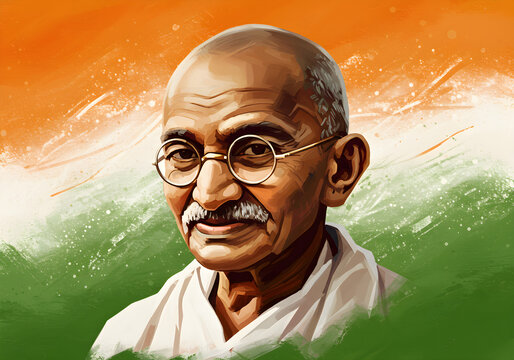
Key Movements and Contributions
- Initial Campaigns (1917–1918): Gandhi began with local struggles to understand Indian issues, including the Champaran Satyagraha (supporting indigo farmers) and Kheda Satyagraha (against oppressive taxes on peasants).
- Non-Cooperation Movement (1920-22): Following the Jallianwala Bagh massacre, Gandhi urged nationwide boycotts of British goods, schools, and courts to force the British to acknowledge Indian demands for self-rule (Swaraj).
- Salt Satyagraha/Civil Disobedience (1930): To protest the British salt monopoly, Gandhi marched 400 km to Dandi, breaking the salt laws and galvanizing national protest against British economic control.
- Quit India Movement (1942): Amidst World War II, Gandhi gave the famous "Do or Die" call, demanding an immediate end to British rule, leading to mass arrests of Congress leaders.
Philosophy and Impact
- Nonviolence and Truth: Gandhi believed in Ahimsa (nonviolence) and Satya (truth) to fight injustice, aiming to change the oppressor's heart rather than destroy them.
- Social Reform: He worked to empower women, eliminate the practice of "untouchability," and foster Hindu-Muslim unity.
- Symbolism: He promoted the Khadi (hand-spun cloth) movement to encourage economic self-reliance, rejecting British textiles. [1, 2, 3, 4, 5]
Further Exploration
- Read an in-depth biography from Britannica.
- Explore a detailed timeline of events from The Quest Journals.
- Understand his philosophy of Satyagraha through the Nonviolent Conflict Database.
- Explore his role in the freedom struggle at Unacademy. [1, 2, 3, 4, 5]
Despite his efforts for unity, the movement was challenged by rising sectarian tensions, leading to the partition of India into India and Pakistan in 1947, a development Gandhi did not favor.